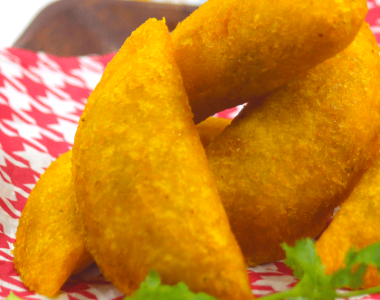

There’s a moment—usually halfway through your first bite of Pandebono—when the confusion hits. Is it bread? Is it cheese? Is it cake? And then, almost immediately, you stop asking questions. Because the flavor takes over.
Pandebono is Colombia’s favorite cheesy bread, known for its golden crust, springy chew, and subtle salty charm. If you’ve never heard of it before, don’t worry—you’re not alone. But after Expo 2025 Osaka, that’s going to change.
Contents
What Is Pandebono?
At first glance, Pandebono looks like a small, unassuming bread roll. But inside, it’s a soft, chewy marvel made from a blend of cassava starch, cheese, corn flour, and yes—a bit of regular flour too. Despite its cassava base, Pandebono is not gluten-free—a common misconception.
This blend of starches and cheeses gives Pandebono its signature bounce and pillowy texture. The flavor? Slightly salty, just cheesy enough, and endlessly comforting. It’s the kind of snack that disappears before you realize you’ve eaten three.
A Colombian Coffeehouse Classic
In Colombia, Pandebono is more than a bakery item—it’s a daily ritual. You’ll find it in nearly every café, bakery, and supermarket, usually stacked in warm trays next to tongs and brown paper bags. And it’s always best when it’s hot.
The bread pairs famously well with coffee—especially café con leche or Colombian hot chocolate. Locals love to dip it, tear it, or simply nibble it between sips. There’s even a nickname for it: “Colombian coffee’s best friend.”
Not Your Average Bread
What makes Pandebono different from other cheesy breads—like Brazilian pão de queijo or American cheese biscuits—is its distinct combination of ingredients. The use of cassava (also called yuca) gives it that elastic chew, while the mix of fresh white cheese (queso costeño or queso fresco) adds richness without overwhelming saltiness.
The dough is usually rolled into balls or flattened discs, then baked until golden on the outside and airy inside. Some variations include a touch of sugar for balance, while others lean more savory. Either way, it’s always a two-bite wonder you’ll want a dozen of.
A Brief History
Pandebono’s origins are a little hazy, but most agree it was born in the Valle del Cauca region in southwestern Colombia. The name “Pandebono” comes from a blend of “pan” (bread) and “bueno” (good), though some claim it refers to a bakery run by an Italian immigrant who sold the bread with a sign that read “pane del buono” (good bread).
Regardless of its origin, Pandebono quickly spread across Colombia, becoming a staple in both rural and urban areas. Today, it’s a go-to for breakfast, afternoon snacks, and just about any time you need a bite that feels like home.
Why It Belongs at Expo 2025
Pandebono might not have the visual flair of a roast pig or the spice punch of a street empanada—but what it offers is universal comfort. At Expo 2025 Osaka, it represents the quieter, softer side of Colombian food culture. The kind you find not at a street vendor, but at your grandmother’s kitchen table.
It’s also a great example of how Latin American flavors can connect with Japanese tastes. Its chewy texture feels familiar to those who enjoy mochi or dango, while the balanced cheese flavor aligns with the Japanese palate’s appreciation for umami and subtlety.
What to Expect at the Colombia Pavilion
While not every visitor at Expo 2025 will be hunting down Colombian baked goods, those who do will discover something quietly delightful. Pandebono will likely be sold fresh and warm, possibly alongside coffee or hot cocoa, mirroring the Colombian tradition of “onces”—the mid-afternoon snack break.
You might get it wrapped in wax paper or a simple paper sleeve. No bells or whistles. Just warm, cheesy bread with a touch of crisp on the outside and a soft, stretchy bite inside. One piece will almost certainly lead to another.
Don’t Confuse It with Almojábanas
Colombia has a few types of cheesy breads, and it’s easy to mix them up. Pandebono is denser and chewier than almojábanas, which are usually softer, more pillowy, and made with a different ratio of flour to cheese.
Almojábanas tend to be sweeter and are more similar to sponge bread. If you get the chance to try both at the Expo, do it. But if you can only pick one, Pandebono brings the perfect balance of texture and flavor.
Simple Ingredients, Serious Satisfaction
What makes Pandebono so lovable is its simplicity. There are no complicated fillings or fancy garnishes—just good ingredients treated right.
Each bite carries a gentle contrast: the crisp shell giving way to a cheesy pull. The slight saltiness balanced with a whisper of sweetness. And the starches—cassava and corn—bring a distinct texture you won’t find in most Western-style breads.
This makes it ideal for pairing. Try it with sweet spreads, jams, butter, or even avocado. But it also shines completely on its own.
The Emotional Bite
Ask any Colombian living abroad what food they miss most, and Pandebono often makes the list. It’s a symbol of home, of casual mornings, of comforting pauses in the middle of a busy day.
For Colombians at the Expo, biting into a Pandebono could be deeply nostalgic. And for first-timers, it’s a rare chance to experience the kind of food that doesn’t make headlines, but makes memories.
Final Thoughts
Pandebono might not come with bold spices or dramatic presentation, but that’s exactly its strength. It’s humble, heartfelt, and utterly satisfying. The kind of food you don’t need to explain—you just pass it around and let the smiles do the talking.
At Expo 2025 Osaka, don’t overlook it. Grab a piece with your coffee, share it with a friend, and enjoy a quiet, chewy moment of Colombian culture.
Because sometimes, the simplest things are the ones you remember most.
And if it’s your first time trying it—trust us, it won’t be your last.